


Calcium for kids is one of the first things parents look into, and for good reason: calcium contributes to the normal growth and development of bone in children. But how much calcium does a child need, and how much of it can come from everyday food? This guide covers what Singapore's Health Promotion Board (HPB) recommends at each age, the local calcium-rich foods for kids that make it easier, and where a kids' calcium supplement can fit in.
How much calcium does a child need? Singapore's recommended amounts
HPB publishes Recommended Dietary Allowances (RDAs) for Singapore. For calcium, the amount rises steadily through childhood, and a teenager's daily recommendation is double a toddler's:
| Age | Recommended calcium per day |
|---|---|
| 1–3 years | 500mg |
| 4–6 years | 600mg |
| 7–9 years | 700mg |
| 10–18 years | 1,000mg |
Source: Health Promotion Board, Recommended Dietary Allowances (HealthHub).
The jump at age 10 is the one many parents miss. A pre-teen who drank a glass of milk a day as a preschooler may need noticeably more calcium from food now than they did then.
Calcium for kids at every stage
Calcium for toddlers (ages 1–3): 500mg a day
Toddlers eat small portions, so every serving counts. Milk, yoghurt and soft cheese are easy wins, and silken tofu mashed into porridge is a gentle non-dairy option.
Preschoolers (ages 4–6): 600mg a day
Preschoolers can manage more variety: tau kwa in stir-fries, cheese on toast, and cooked kai lan chopped small into rice or noodles.
Primary schoolers (ages 7–9): 700mg a day
Once school starts, children eat more meals away from home. A calcium-rich breakfast, such as cereal with milk or a glass of high-calcium soy milk, helps before a long school day.
Pre-teens and teens (ages 10–18): 1,000mg a day
This is the biggest step up. Teenagers often skip breakfast or swap milk for other drinks, so it's worth planning calcium into snacks as well as meals.
Calcium-rich foods for kids: local favourites
The good news is that many foods Singapore families already eat are good sources of calcium. HPB lists these amounts per serving (adult portions; children's portions are usually smaller):
| Food | Serving | Calcium |
|---|---|---|
| Full-cream milk | 1 glass (250ml) | 300mg |
| Low-fat yoghurt | 1 carton (150g) | 240mg |
| Low-fat cheese | 1 slice (20g) | 200mg |
| Dried ikan bilis, with bones | 2 tablespoons (40g) | 270mg |
| Canned sardine, with bones | 1 fish (50g) | 270mg |
| Tau kwa | 1 small cake (90g) | 150mg |
| Silken tofu | 1 package (150g) | 100mg |
| Kai lan, cooked | ¾ mug (100g) | 195mg |
| High-calcium soybean milk | 1 glass (250ml) | 500mg |
Source: Health Promotion Board, "Daily Calcium Intake for Greater Bone Strength" (HealthHub).
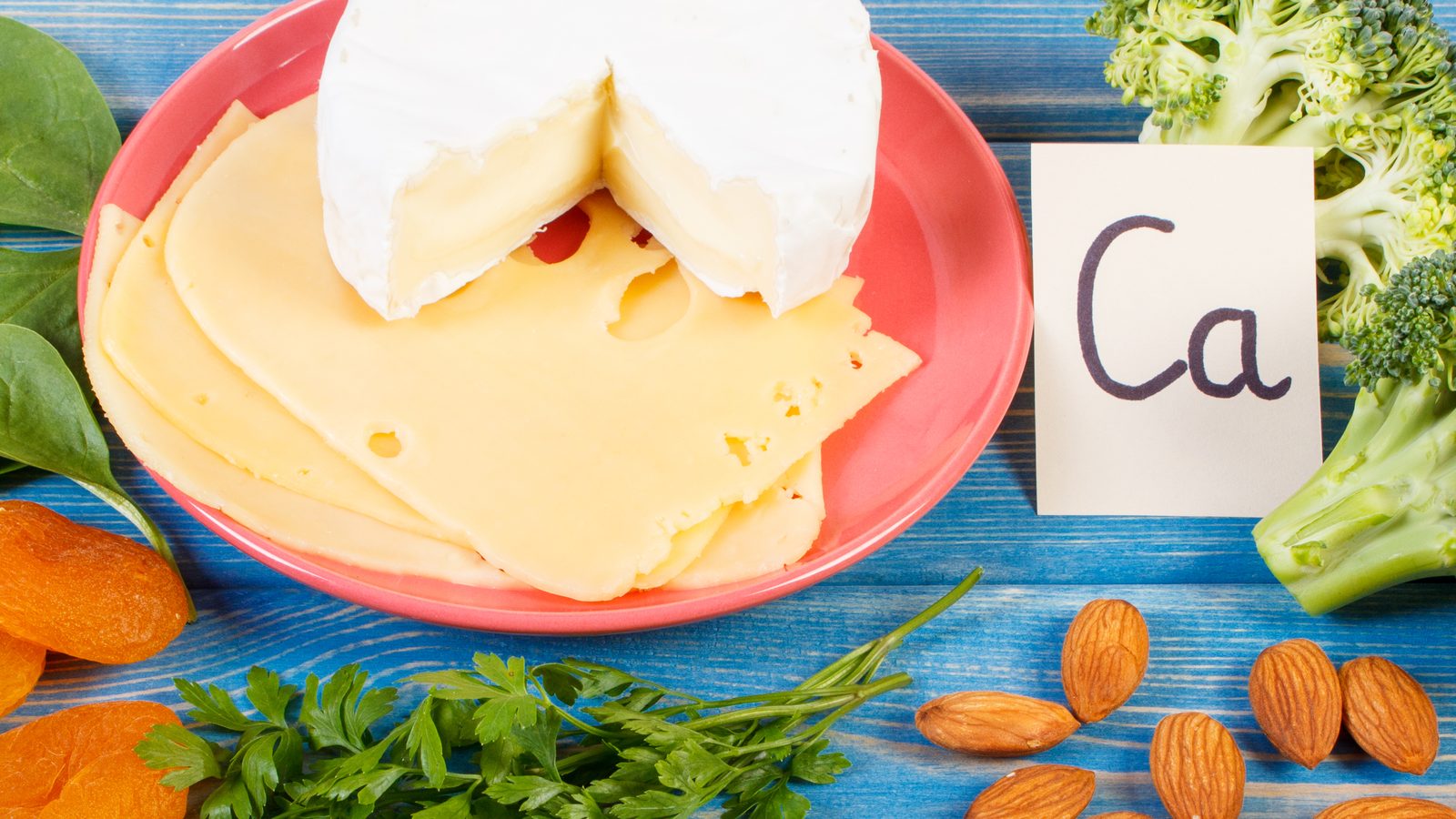
To put that in context: for a child aged 4 to 6, a glass of milk (about 300mg) and a carton of yoghurt (about 240mg) already come close to the 600mg a day HPB recommends. For a 12-year-old, the same two servings are around half of the 1,000mg recommendation, so calcium needs more thought as children get older.
Can children get enough calcium without milk?
Many can, with a little planning. If your child doesn't drink milk, lean on the non-dairy calcium-rich foods in the table: ikan bilis and sardines eaten with their bones, tau kwa and tofu, cooked kai lan, and calcium-fortified soy milk. A varied diet is always the starting point.
A quick calcium check of your child's day
You don't need to weigh every meal. For a rough picture, jot down the calcium-rich foods your child eats over a normal weekday and a weekend day, then compare them with the table above and the recommended amount for their age. If the list looks short, small changes help: yoghurt as an after-school snack, tau kwa at dinner, or high-calcium soy milk in place of a sweet drink. If you're unsure, your doctor or a dietitian can review your child's diet with you.
Calcium and vitamin D
Calcium and vitamin D are often mentioned together, and HPB sets recommended amounts for both. For vitamin D, HPB recommends 10mcg a day up to age 6, and 2.5mcg a day from 7 to 18, amounts set for Singapore's tropical climate. Oily fish, eggs and fortified foods provide vitamin D, alongside sensible time outdoors.
Is a kids' calcium supplement right for your child?
When it comes to calcium for kids, food comes first. Food supplements should complement, not replace, a balanced diet. A calcium supplement is something some parents consider when a child is a fussy eater, doesn't drink milk, or when mealtimes are hard to plan around school and activities.
If you're looking at a kids' calcium supplement in Singapore, check three things on the label: that it is formulated for your child's age, that it names its ingredients and their amounts, and that the serving is clearly set out by age. If your child has a medical condition, an allergy or takes medication, talk to your doctor first.
How Heilebär Liquid Calcium fits in
Heilebär's liquid calcium for kids comes in two formulas, developed separately for two age groups. Each comes as a ready-to-drink 15ml sachet, with nothing to chew, measure or mix:
- Liquid Calcium 1–6: 300mg calcium citrate per sachet, with vitamin D3 (400 IU) and vitamin K2, flavoured with real strawberry concentrate. Suitable from age 1.
- Liquid Calcium 6–18: 350mg calcium citrate per sachet, with vitamins D3 and K2 and L-lysine, flavoured with real blueberry concentrate. Contains milk and egg derivatives.
Calcium citrate is a gentle organic calcium source. Both formulas are taken 30 minutes after dinner, or 1 hour before bed, so they fit into an evening routine alongside the calcium your child already gets from food.